
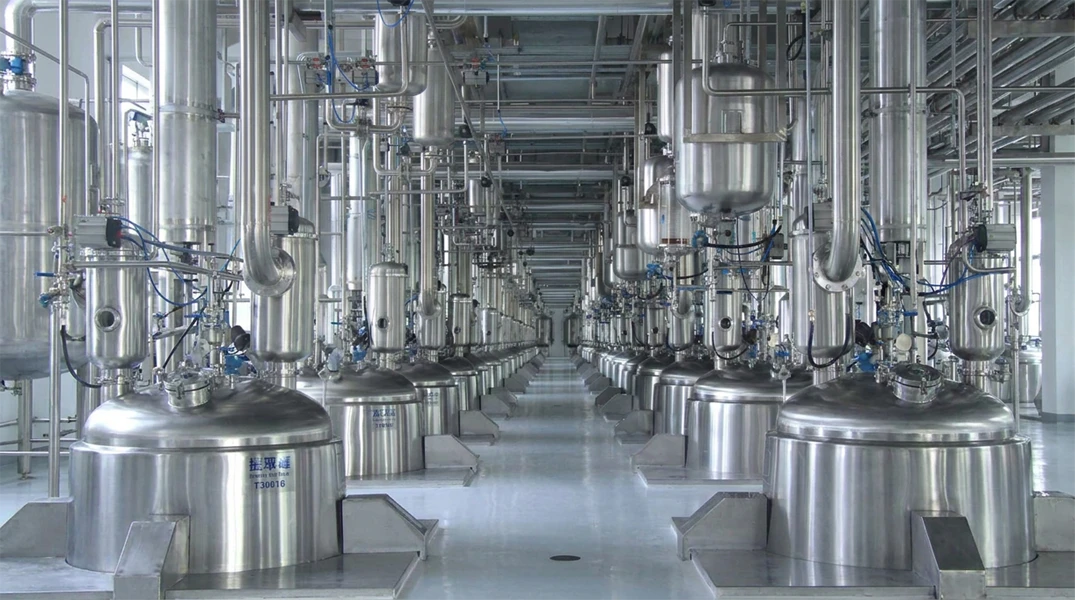
Extraction is one of the most important steps in tea beverage development. For ready-to-drink tea, tea concentrates, and tea extract-based formulations, extraction conditions can influence not only yield, but also bitterness, astringency, freshness, tea strength, and overall sensory balance.
For beverage brands and formulation teams, the key question is not simply how to extract more solids from tea leaves. The more practical question is how to balance tea polyphenols, amino acids, caffeine, and sensory quality under the right processing conditions.
This article explains how extraction time and temperature can affect the main taste-related compounds in tea beverages.
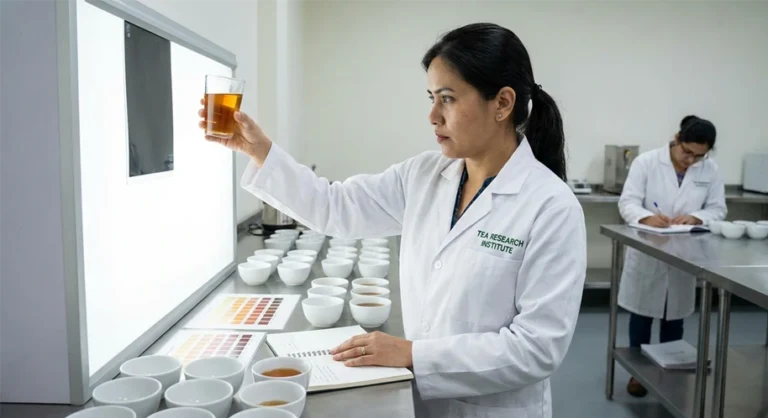
Why extraction conditions matter in tea beverage formulation
Tea leaves contain many water-soluble compounds that contribute to the final taste of a tea beverage. Among them, polyphenols, catechins, amino acids, and caffeine are especially important for sensory performance.
Tea polyphenols and catechins contribute to tea character, bitterness, astringency, and body. Amino acids, especially L-theanine, contribute to freshness, smoothness, and umami-like taste. Caffeine can add bitterness and perceived tea strength, while also interacting with other tea compounds during extraction and storage.
In practical beverage development, extraction conditions need to be controlled because stronger extraction does not always mean better taste. A higher extraction level may increase tea character, but it may also increase bitterness, astringency, or turbidity risk.
Effect of extraction time on tea polyphenols and catechins
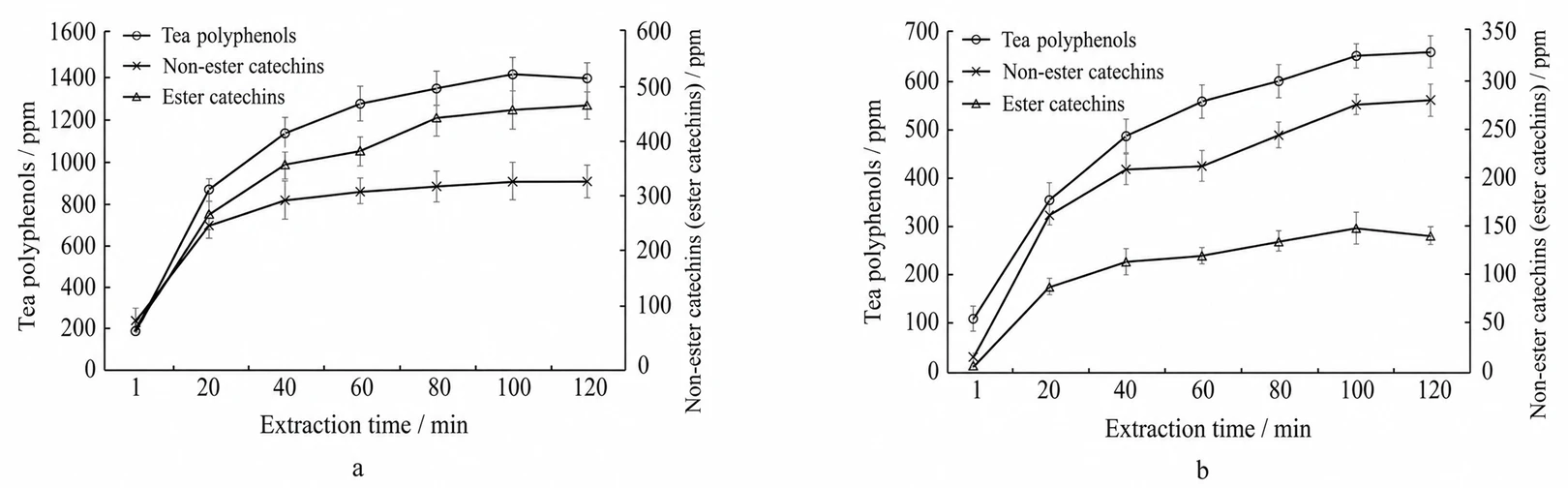
As extraction time increases, tea polyphenols and catechins generally continue to dissolve into the tea liquor. In the early stage of extraction, the dissolution rate is usually faster. After a certain point, the extraction rate slows down and the increase becomes less significant. Studies on green tea infusion have also shown that brewing temperature and infusion time can influence catechin extraction, caffeine content, and sensory attributes.
For beverage formulation, this means that longer extraction time can create a stronger tea profile, but it can also increase astringency and bitterness. This is especially important for RTD tea beverages, where the final product needs to remain drinkable after dilution, blending, heat treatment, filling, and storage.
Different tea materials may also behave differently. In the referenced extraction comparison, green tea showed higher levels of tea polyphenols and catechins than sencha under the tested conditions. However, the most suitable extraction condition still depends on the target flavor, tea type, product format, and final application.
Effect of extraction time on amino acids and freshness
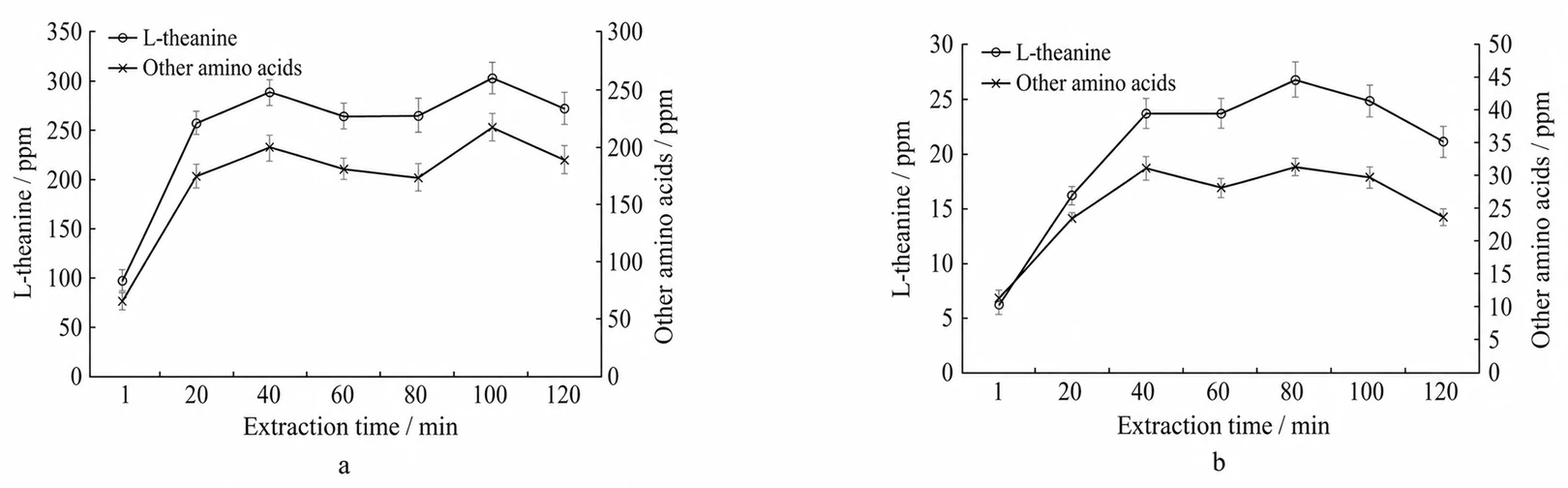
Amino acids are important contributors to the fresh and smooth taste of tea beverages. L-theanine is one of the most recognized amino acids in tea and is closely related to freshness, smoothness, and the balancing of bitterness and astringency. Research on different tea types has reported that L-theanine and caffeine levels can vary depending on tea material, brewing temperature, and infusion time.
During extraction, amino acids can dissolve relatively quickly in the early stage. After the initial extraction period, the increase may become smaller. This means that extending extraction time may not always bring a proportional improvement in freshness.
For product development, this is useful because the best sensory result often depends on balance. A formulation with sufficient amino acid extraction but excessive polyphenols or caffeine may still taste too bitter or too astringent. Therefore, extraction time should be evaluated together with the final sensory target.
Effect of extraction temperature on taste compounds
Extraction temperature also affects the release of tea compounds. In general, higher temperatures can increase the dissolution of polyphenols, amino acids, and caffeine. However, higher extraction efficiency is not always equal to better sensory quality. This is consistent with broader findings that water temperature and infusion time can influence the extraction efficiency of tea compounds.
A higher temperature may help extract more tea solids within a shorter time, but it may also increase bitterness, astringency, cooked notes, or color changes depending on the tea material and processing method. Lower extraction temperatures may produce a smoother tea liquor, but they may require longer processing time or different concentration control.
For industrial tea beverage production, extraction temperature should be selected based on the final application. A lightly flavored tea drink, a milk tea base, a concentrated tea extract, and an instant tea powder may require different extraction priorities.
Caffeine, bitterness, and clarity considerations
Caffeine is another important taste-related compound in tea beverages. It can contribute bitterness and perceived tea strength. Its extraction level can increase with longer time and higher temperature, although the degree of change depends on tea type and extraction conditions.
Caffeine may also interact with polyphenols and other tea compounds. In some tea beverages, excessive extraction or poor formulation control may contribute to turbidity, precipitation, or reduced brightness over time. This is especially relevant for RTD tea beverages, where clarity, color, and shelf-life appearance can influence consumer acceptance.
For this reason, caffeine should not be considered separately. It should be evaluated together with polyphenols, amino acids, pH, thermal processing, storage conditions, and the target sensory profile.
Sensory balance: why the highest extraction is not always the best
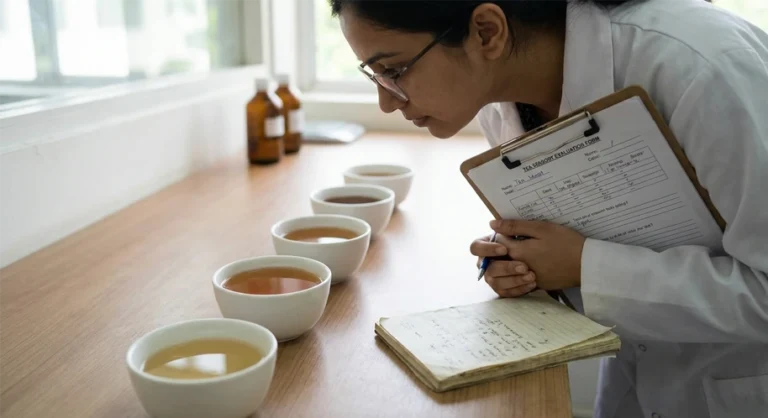
The best tea beverage is not always the one with the highest level of extracted compounds. Sensory evaluation often shows a balance point.
When extraction is too light, the tea beverage may taste weak, thin, or lack tea character. As extraction increases, tea flavor, body, and freshness can improve. However, after a certain point, bitterness and astringency may become stronger, reducing the overall sensory score.
In the referenced comparison, sensory scores first increased and then decreased as extraction time became longer. Under the tested conditions, green tea showed its best sensory performance at around 60 minutes, while sencha performed best at around 80 minutes. Both showed better sensory balance at 30°C within the tested temperature range.
These results should not be treated as universal processing parameters. Instead, they show an important formulation principle: extraction conditions should be optimized for each tea material and final beverage application.
How Switea supports tea ingredient selection
Switea supplies bulk tea, instant tea powder, matcha, and freeze-dried tea powder for beverage and food brands. For tea beverage projects, extraction performance, flavor balance, solubility, color, and application suitability should be evaluated together.
If you are developing an RTD tea beverage, tea concentrate, milk tea base, or dry mix product, Switea can support product selection, sample evaluation, specifications, and B2B quotation discussions based on your application requirements.
Contact Switea to discuss tea ingredient options, sample needs, and formulation direction for your next tea-based beverage project.
FAQ
Does longer extraction always improve tea flavor?
Not necessarily. Longer extraction can increase tea solids, polyphenols, catechins, amino acids, and caffeine, but it may also increase bitterness and astringency. The best extraction time depends on tea type, target flavor, and final application.
Why does extraction temperature affect tea beverage taste?
Temperature affects how quickly tea compounds dissolve into water. Higher temperatures may increase extraction efficiency, but they can also change bitterness, astringency, color, and sensory balance.
Which compounds are most important for tea beverage taste?
Tea polyphenols, catechins, amino acids, and caffeine are key taste-related compounds. Polyphenols and catechins contribute tea character and astringency, amino acids contribute freshness and smoothness, and caffeine contributes bitterness and tea strength.