

A Global Wave of Matcha Demand
In recent years, a global wave of enthusiasm for matcha powder has swept across the food and beverage industry. On platforms such as TikTok and China’s Xiaohongshu, creators around the world are posting matcha powder in baking recipes, desserts, snacks and drinks. Influencers review new launches, share café discoveries and post DIY tutorials, and matcha now appears in almost every conceivable pairing. As a result, demand has surged and prices have climbed sharply. According to Forbes, the global matcha market is expected to reach around USD 5 billion by 2028, more than 10% higher than in 2023.

In the early phase of this trend, most products were positioned firmly around a “Japanese style” flavor profile. Yet just as matcha was going mainstream, Japan itself began to struggle with supply. Data from Japan’s Ministry of Agriculture, Forestry and Fisheries show that exports of green tea, including matcha, reached USD 240 million in 2024, up 25% year-on-year. Demand is booming—but production capacity has become a bottleneck, forcing some companies to ration supply even in the domestic market.
Japan’s Matcha Supply Under Structural Pressure
Despite being widely regarded as the traditional powerhouse of matcha, Japan’s supply chain has been stretched thin by surging demand. On the demand side, domestic consumption of traditional loose-leaf tea has been declining as consumers switch to ready-to-drink beverages and other convenient formats. The market for brewing tea in a pot at home continues to shrink. On the production side, limited tea-growing area, aging tea bushes and a shortage of agricultural labor mean that Japanese matcha production is close to its ceiling. In recent years, extreme weather and geopolitical uncertainty have added further volatility to the supply chain, exacerbating the shortage.
Scaling up matcha production is far from straightforward. The industry relies on two key stages: cultivating shade-grown tea leaves (tencha) and grinding them into fine powder. Both are capacity-constrained. In theory, Japan still has room to expand planted area, but tea bushes typically require up to five years to reach full productivity. Even if planting increases today, it will not quickly translate into additional supply. On the grinding side, tea leaves are highly prone to oxidation and quality loss, so they are usually milled close to the point of use rather than stockpiled as finished powder. To maintain a particle size of around 10 microns and avoid heat damage during milling, producers still depend heavily on traditional stone mills. High-quality stone mills are scarce, require specialist craftsmanship to carve, and can take at least a month to produce—an obvious bottleneck in a fast-growing market.
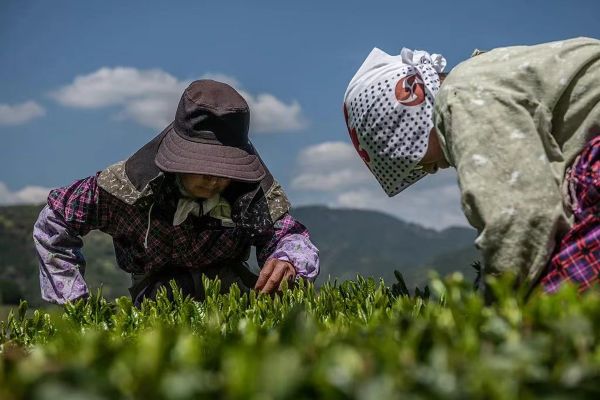
The labor picture is equally challenging. Japan’s agricultural sector has been hit hard by population aging, and tea farming is no exception. The number of tea growers has fallen from 53,000 in 2000 to around 12,000 in 2020. As older farmers retire and few younger successors step in, more tea fields are being left abandoned or poorly maintained. By 2023, Japan’s matcha output had fallen to just 78% of its 2008 level.
China as the World’s Leading Matcha Producer and Consumer
In parallel, China has emerged as both the world’s fastest-growing and largest matcha producer. In 2020, it produced around 3,900 metric tons of matcha, accounting for roughly 56% of global output, while total domestic consumption – including imported product – reached about 4,000 metric tons, also around 56% of global demand. In volume terms, the matcha market is now essentially “China versus the rest of the world.”
China’s matcha industry was initially built with significant technology transfer from Japan. Starting in 1972, Chinese producers imported multiple steam-green-tea processing lines from Japan, installing them across Zhejiang, Jiangxi, Anhui, Fujian and other provinces. Although these lines were initially used to produce conventional green tea, they laid the groundwork for later matcha manufacturing. After more than three decades of development and steadily growing demand at home and abroad, several “golden clusters” of matcha production have emerged in China, and the Chinese matcha industry is now worth roughly USD 2.5 billion a year.
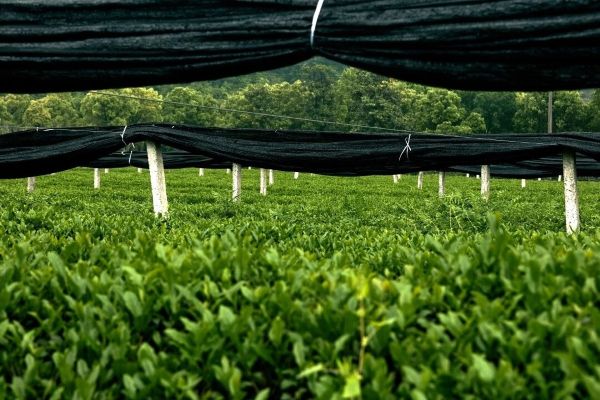
Compared to Japan, which faces multiple structural constraints in its transition, China benefits from a vast domestic market that can quickly signal changes in supply–demand dynamics. With more than 60% of the world’s green tea output and a wide range of tea-growing regions that can complement one another, China is well positioned to scale matcha production, optimize costs and capture additional share in global markets—effectively leapfrogging from latecomer to front-runner.
Looking Ahead: A New Global Matcha Landscape
Looking ahead, the global matcha industry is likely to evolve toward a model in which Chinese and Japanese producers cooperate more closely on technology while global capacity is spread across multiple regions. In such a landscape, product quality, consistency and cultural value will become the key differentiators in competition, rather than origin alone.
If you are exploring new matcha or instant tea concepts for beverages, bakery or dairy products, our team can share more detailed market insights and product specifications. Feel free to contact us for samples, technical discussions or long-term supply planning.