
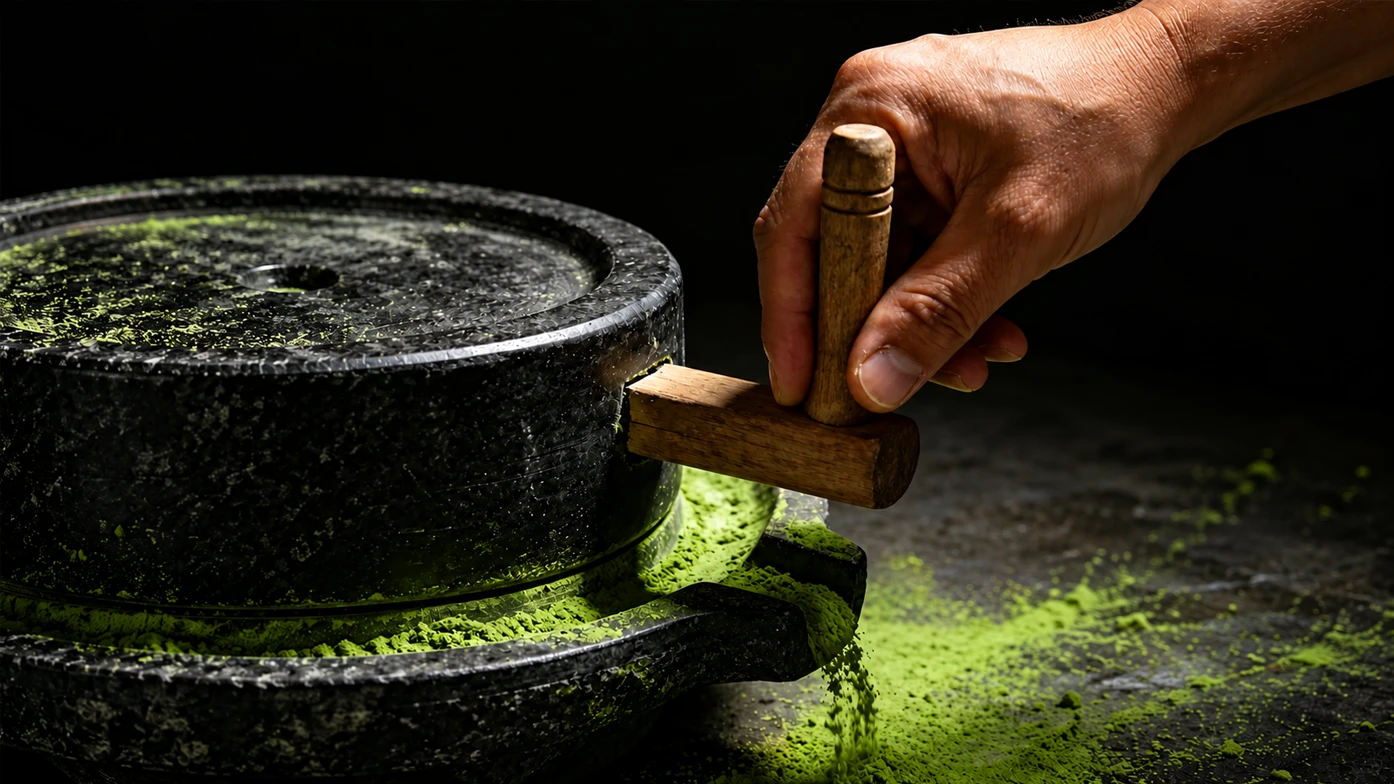
When comparing matcha powders, you may come across descriptions such as 800 mesh, 1000 mesh, or even 1200 mesh. A larger number sounds more advanced, so it is easy to assume that a higher mesh means finer matcha, and that finer matcha must be better.
But matcha quality is not that simple.
Particle size does matter. It affects mouthfeel, foaming, flow behavior, and how the powder performs during use. However, once matcha has already reached an appropriate fineness, grinding it further does not necessarily improve its overall quality.
In short: matcha needs to be fine, but the finest matcha is not automatically the best matcha.
What Does “Mesh” Mean in Matcha Powder?
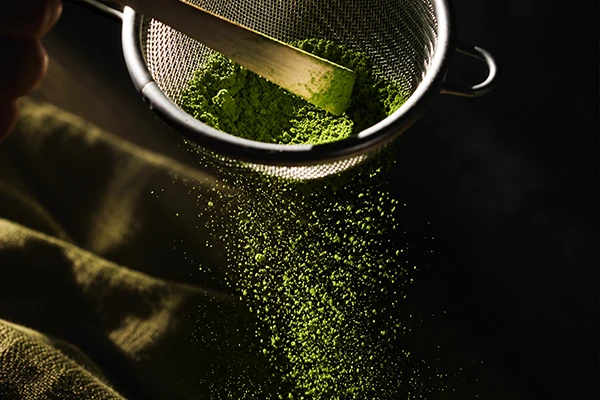
Mesh is originally a way of describing the opening size of a sieve. In general, a higher mesh number indicates smaller sieve openings and therefore finer particles that can pass through them.
Because it is simple and easy to understand, mesh is still commonly used in discussions about tea powders and other powdered ingredients.
The problem is that mesh does not fully describe the actual particle-size distribution of matcha.
Real matcha powder contains particles of different sizes. For very fine powders, measurements in micrometers (μm), together with values such as D50, D60, or D90, provide much more useful information than a single mesh number.
What Does D60 ≤ 18 μm Mean?
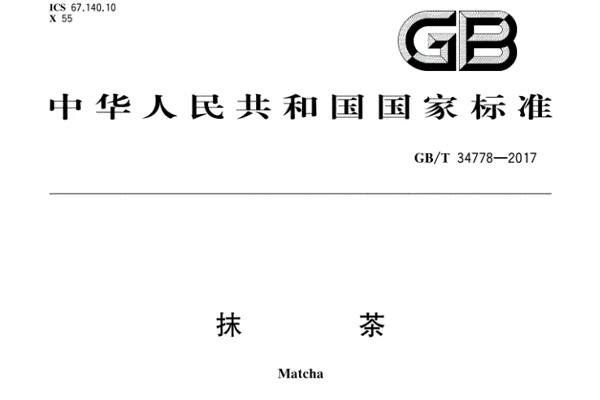
China’s current national standard for matcha, GB/T 34778-2017, remains an active national standard. Research applying this standard describes its particle-size requirement as D60 ≤ 18 μm.
D60 is a particle-size distribution value. In simple terms, it refers to the particle diameter below which about 60% of the measured particles fall.
So D60 ≤ 18 μm does not mean that every matcha particle is smaller than 18 μm.
This is also why converting micrometers directly into a specific mesh number should be treated only as a rough industry shorthand, not as an exact mathematical equivalence.
For professional sourcing, actual particle-size data and the measurement method are usually more informative than a statement such as “1000 mesh.”
Why Does Matcha Need to Be Finely Ground?
Unlike conventional brewed tea, where the leaves are removed after extraction, matcha powder is dispersed directly into water and consumed together with the beverage.
If the particles are too coarse, the powder can feel gritty or rough in the mouth. Finer particles generally help create the smoother texture people associate with matcha.
Particle size can also affect other physical properties.
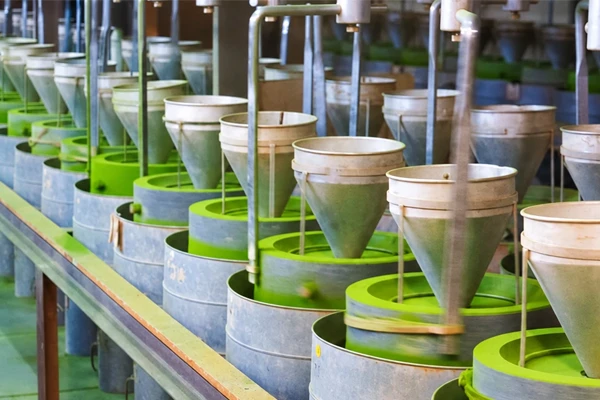
A study published by the Japanese Society for Food Science and Technology compared matcha produced by stone milling, ball milling, and jet milling. It found that particle size and particle shape influenced properties including flowability, extensibility, and foaming performance. Finer samples showed stronger foaming performance than coarser ones.
So moving from coarse tea powder toward an appropriate micrometer-scale particle size can clearly improve product performance.
However, these benefits do not necessarily continue as particle size keeps decreasing. The more important question is what happens once the powder is already fine enough.
Why Finer Matcha Is Not Always Better
A 2019 study in the Journal of Tea Science examined matcha samples with median particle sizes ranging from about 117 μm down to 14.2 μm.
As milling continued, particle size decreased and cell-wall disruption increased.
However, once the particles became sufficiently fine, the researchers observed another effect: the increase in specific surface area and surface energy made the particles less stable and more likely to adhere and agglomerate.
This is important because it challenges a common assumption: Smaller particles do not always mean easier dispersion.
When very fine particles have high surface energy, they can attract one another and form secondary agglomerates. A recent review of superfine grinding in food powders describes the same limitation, noting that excessive micronization may increase particle agglomeration and eventually offset some of the benefits of further size reduction.
Excessive Grinding Comes With Trade-Offs
Reducing an already fine powder by a few more micrometers requires additional mechanical energy.
In ball milling, for example, longer grinding times mean more friction and collision between the grinding media, equipment, and tea particles.
A 2025 study on superfine green tea powder — not matcha specifically, but relevant to the same type of mechanical grinding process — found that prolonged milling could generate enough frictional heat to affect components such as chlorophyll, tea polyphenols, caffeine, and free amino acids. The researchers concluded that grinding time should not simply be extended indefinitely.
The 2019 matcha study showed a similar pattern. As grinding continued, tea polyphenols and free amino acids first increased and then decreased, while ascorbic acid and EGCG showed declining trends.
Beyond these quality changes, further grinding also comes with a practical cost: lower production efficiency and higher energy use. If a matcha already performs well at an appropriate particle size, spending significantly more time and energy to reduce the specification by only a few additional micrometers may not produce an equivalent improvement in the final product.
The Finest Sample May Not Have the Best Overall Quality
A 2024 study published in China Tea Processing provides a particularly useful example.
Researchers compared matcha produced with different ball-milling times.
As expected, longer milling produced smaller particles. At 80 minutes, the D60 values of two matcha samples had fallen to approximately 13.39 μm and 13.47 μm.
If smaller particle size alone determined quality, the 80-minute samples should have performed best. However, that was not the case.
When the researchers evaluated multiple quality indicators together, the optimal milling time was 70 minutes, when D60 was approximately 15 μm.
That difference may look small on a specification sheet, but it illustrates an important principle: The lowest particle-size number is not necessarily the point of best overall matcha quality.
Particle size should be treated as a process parameter to control, not a number to minimize without limit.
What Should Food and Beverage Brands Consider Instead?
For B2B buyers, comparing only “800 mesh vs. 1000 mesh vs. 1200 mesh” tells you very little about whether a matcha will actually work in your formulation.
A better approach is to combine particle-size data with sensory and application testing.
For traditional preparation or matcha lattes, a smooth mouthfeel, tea intensity, and performance in milk-based systems may matter most.
For bakery, ice cream, chocolate, and confectionery, color, flavor intensity, and compatibility with the food matrix may be more important than achieving the smallest possible particle size.
For beverage formulations, brands may also need to evaluate dispersion behavior and stability over time.
In other words, the right matcha is not simply the one with the highest mesh claim. It is the one that performs well in the product you are actually developing.
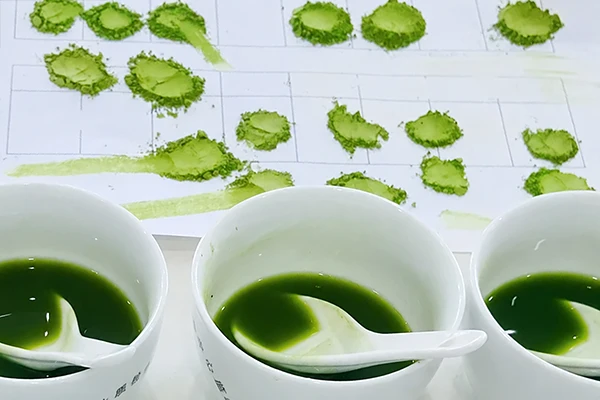
So, Is Finer Matcha Always Better?
No — but fineness still matters.
Within a suitable range, reducing particle size can improve mouthfeel and some powder properties.
But once the powder has reached an appropriate micrometer-scale particle size, pushing it even finer can introduce new trade-offs: greater agglomeration tendency, higher mechanical and energy input, more demanding process control, and no guarantee of better overall sensory quality.
That is why a single number such as “1000 mesh” or “1200 mesh” should never be treated as a complete measure of matcha quality.
A more useful evaluation looks at the full picture: particle-size distribution, raw-material quality, milling process, color, aroma, taste, and performance in the final application.
So the next time you see a high-mesh matcha specification, the better question may not be:
“How many mesh is it?”
but rather:
“What is its actual particle-size distribution, and does it perform well in my product?”
For more information about our Matcha powder portfolio, see our Matcha powder product range. If you are comparing matcha powders and need particle-size data, specifications, or samples for evaluation, contact Switea to discuss your sourcing requirements.