
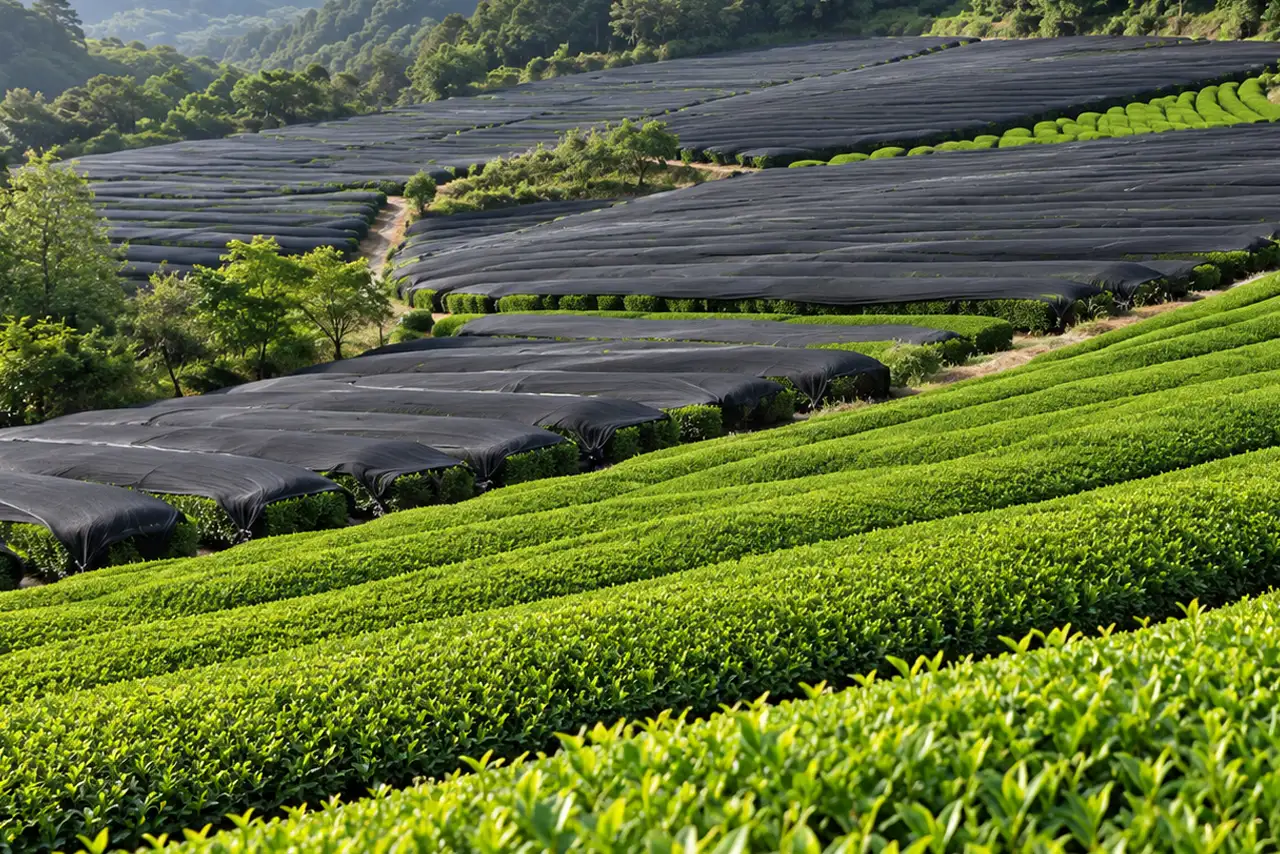
Matcha’s color and flavor depend on both processing and the conditions in which the fresh leaves are grown. The quality foundation for tencha, the tea material milled into matcha, starts with cultivar selection, garden establishment and canopy management.
These elements of matcha tea garden management support fresh leaf growth and influence how shading and harvesting are scheduled. Understanding them helps explain what it takes to manage a tea garden for tencha production.
1. Selecting Tea Cultivars for Matcha Production
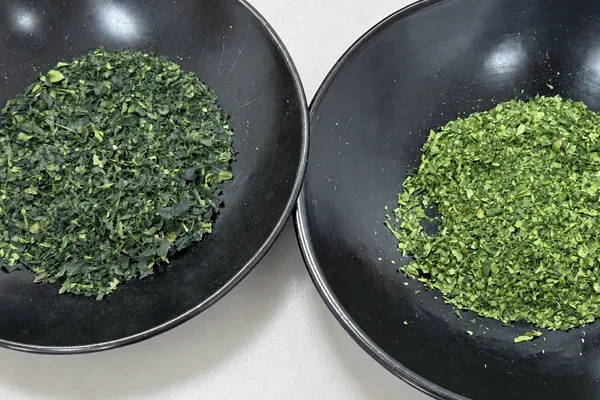
What traits matter when selecting a cultivar?
Leaf color is only one consideration. When selecting cultivars for a matcha tea garden, growers should also consider:
- Quality characteristics: Chlorophyll and amino acid content, together with the color, aroma and flavor of the processed tea.
- Growth characteristics: Adaptation to local conditions, plant vigor and how long new shoots remain tender enough for processing.
- Production suitability: Compatibility with pruning, shading and harvesting practices, alongside yield.
Technical guidance from Zhejiang identifies chlorophyll, amino acids, internode length, shoot tenderness and yield among the traits to consider.[1] Local field trials and processing trials help assess how these characteristics work together.
Which tea cultivars are suitable for matcha production?
Zhejiang’s regional standard lists Longjing 43, Zhongcha 108, Asahi, Yabukita and Okumidori as suitable options.[2] Both Chinese and introduced cultivars can be considered, with selection guided by their local growth and processing performance.
Regional research provides a specific example. A study comparing tencha made from five cultivars introduced to the Fanjingshan area reported that Jin Xuan tencha had the highest free amino acid content among the samples, at 3.380%.[3] This finding provides a reference for assessing Jin Xuan’s suitability for tencha production in that area.
Why combine cultivars with different flushing times?
Zhejiang’s recommended production techniques describe combining cultivars such as Zhongcha 108, Longjing 43, Yabukita and Okumidori to improve processing equipment utilization.[1]
Cultivars with different flushing times can reach harvest readiness at different points, helping spread the harvesting and processing workload. The relevant timing is shoot development and harvesting, rather than flowering. The combination should suit the local climate and the processing facility’s capacity.
2. Soil Conditions and Planting Layout
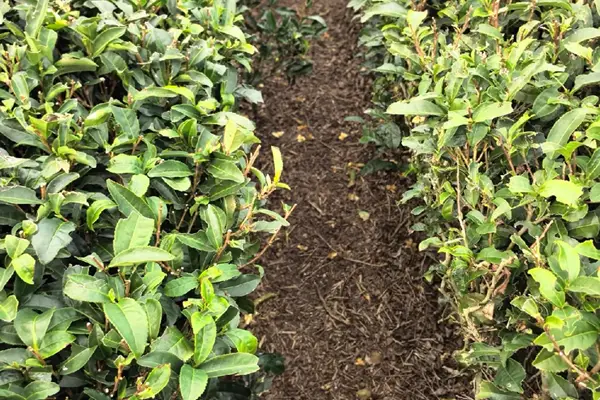
Plan for both plant growth and field operations
A matcha tea garden needs to accommodate shading structures, pruning, harvesting and fresh leaf transport. Tea rows, access roads, irrigation and drainage should therefore be planned together.
Zhejiang’s Green Production Practices for Matcha Tea Gardens standard provides the following regional example:[2]
| Factor | Guidance in the Zhejiang standard |
|---|---|
| Terrain | Flat or gently sloping land; contour terraces for sloping gardens |
| Soil | Loose, fertile soil, with a recommended pH of 4.0–6.0 |
| Effective soil depth | At least 1 m |
| Surroundings | Separation from pollution sources, with buffer zones, isolation ditches or tree belts at relevant boundaries |
These conditions support root growth, field operations and environmental risk management. Garden establishment should follow local conditions and applicable guidance, rather than applying another region’s specifications without adjustment.
What soil pH is suitable for a matcha tea garden?
Tea plants grow well in acidic soil, but recommended pH ranges vary by region. Zhejiang’s standard gives a range of 4.0–6.0, while a Lu’an government document on high-standard tea garden development specifies 4.5–5.5.[2] These are regional recommendations, rather than evidence of one universally optimal pH for all matcha tea gardens.
Soil management also needs to consider nutrient availability, organic matter and drainage. The balance between organic and mineral fertilizers, and the supply of nitrogen, phosphorus and potassium, should reflect soil fertility, production targets and plant requirements.[4]
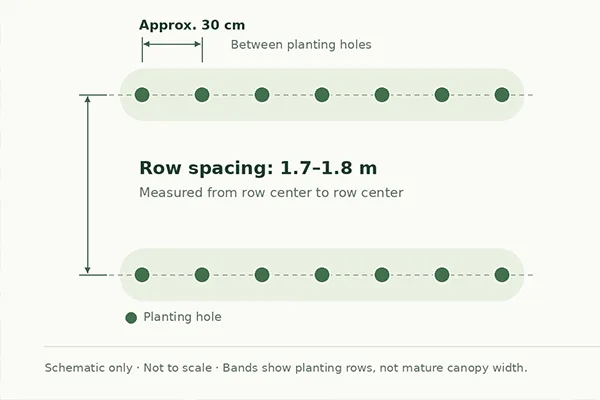
Match the planting layout to the machinery
For new gardens, Zhejiang’s standard recommends row spacing of 1.7–1.8 m, with single- or double-row planting, approximately 30 cm between planting holes, and one or two plants per hole.[2]
This provides one layout reference for mechanized production. Machinery dimensions, terrain and canopy width all affect the working space needed, so the planting arrangement should be selected as part of the overall garden design.
3. Canopy Training and Pruning for Matcha Tea Gardens
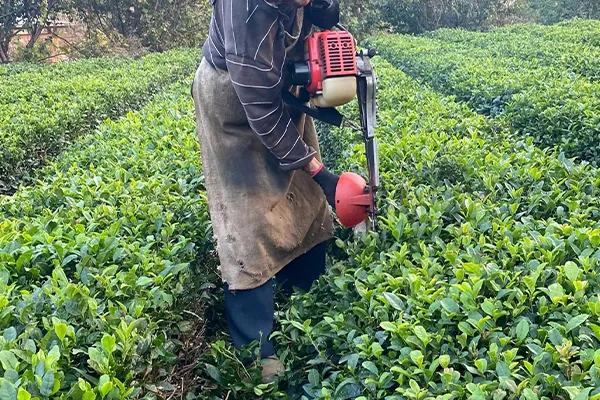
How does formative pruning develop the canopy?
Young tea plants undergo formative pruning to develop a canopy that will support later harvesting. The orderly tea rows seen in established gardens are the result of continued pruning and field management.
Zhejiang’s standard gives the following heights for three stages of formative pruning:[2]
| Pruning stage | Cutting height above ground |
|---|---|
| First | 20–25 cm |
| Second | 30–35 cm |
| Third | 40–45 cm |
These figures illustrate a staged approach to canopy development. Pruning should also reflect the plants’ actual growth, rather than following plant age alone.
How often should established tea plants be pruned?
Once the canopy is established, continued pruning helps maintain its structure. Light pruning removes shoots projecting above the plucking surface. Deeper or heavier pruning may be used when the branching structure or plant vigor requires renewal.[5]
Depending on plant growth, Zhejiang’s standard specifies light pruning once or twice a year, with deep or heavy pruning every three to five years.[2] These operations should be coordinated with harvesting and periods of recovery. China’s Ministry of Agriculture and Rural Affairs also advises postponing pruning during hot, dry conditions.[6]
Cultivar selection shapes some of the raw material’s inherent characteristics. Soil and site conditions support growth, while planting layout and pruning create a structure suited to field management and harvesting. Together, these elements of matcha tea garden management provide the fresh leaf foundation for subsequent shading and tencha processing.
For beverage and food applications, explore Switea’s matcha powder range or contact us to discuss specifications and sourcing requirements.
References
1. Zhejiang Agricultural Technology Extension Center. Recommended Crop Production Techniques, 2023, section on matcha production, PDF pp. 128–130. Government-hosted document. In Chinese.
2. Zhejiang regional standard DB33/T 2339—2021, Green Production Practices for Matcha Tea Gardens (descriptive English translation). Official full text. In Chinese.
3. Zhang Mingsheng et al. Comparative Analysis of the Main Physicochemical Components of Tencha Made from Five Tea Cultivars (translated title). Food Safety Guide, 2024. Public abstract. In Chinese. The result cited here is reported in the abstract.
4. Ministry of Agriculture and Rural Affairs of China. Scientific Fertilization Guidance for Major Crops, Autumn–Winter 2020, section on tea plants. Official guidance. In Chinese.
5. Ministry of Agriculture of China. Technical Guidance on Mechanized Tea Garden Production. Official guidance. In Chinese.
6. Ministry of Agriculture and Rural Affairs of China and partner organizations. Technical Guidance on Summer and Autumn Tea Garden Management and Disaster Prevention, 2022. Official guidance. In Chinese.
7.Lu’an Municipal Government Office. Notice on Improving Tea Garden Quality and Production Efficiency, 2021. Official document. In Chinese.