
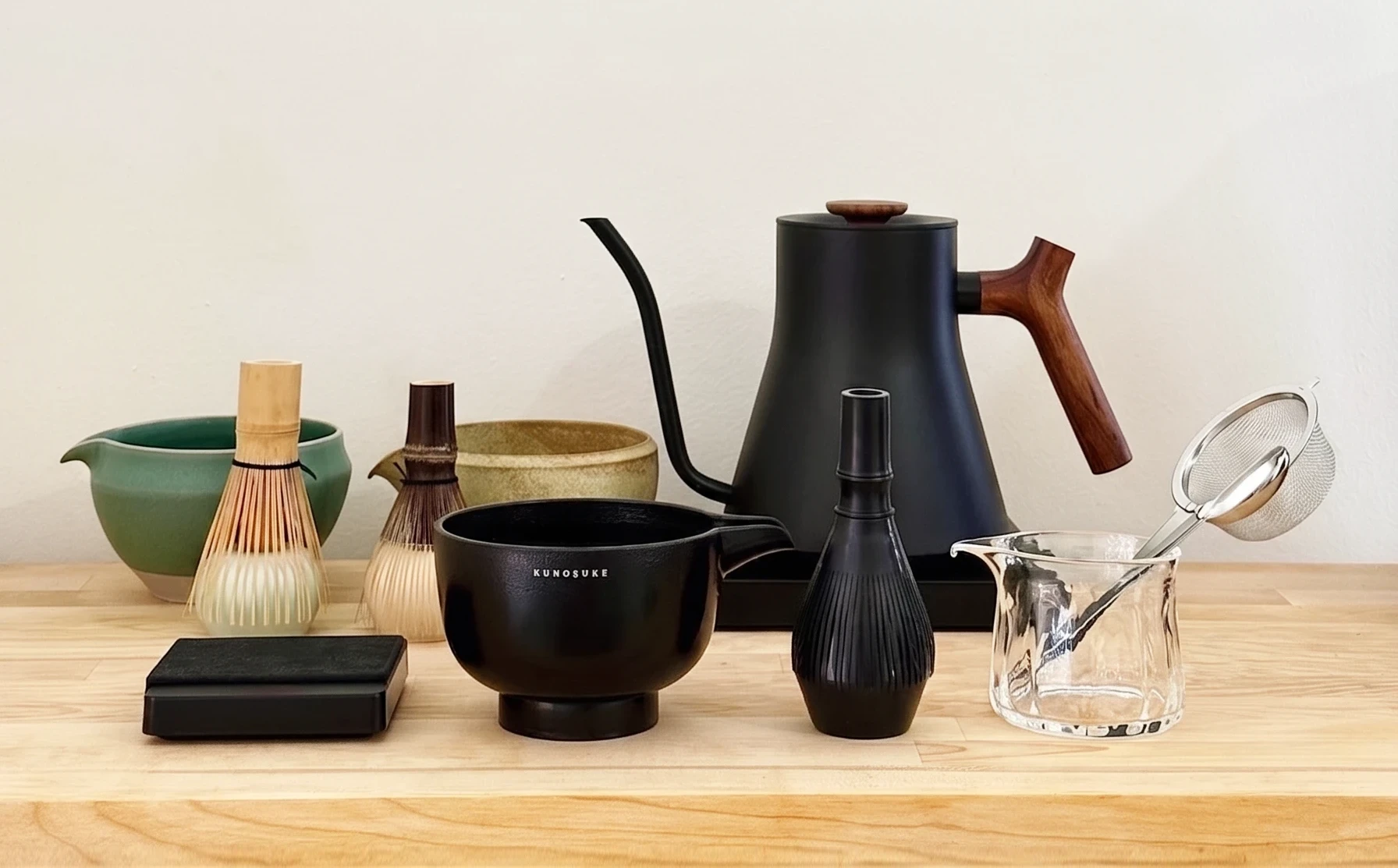
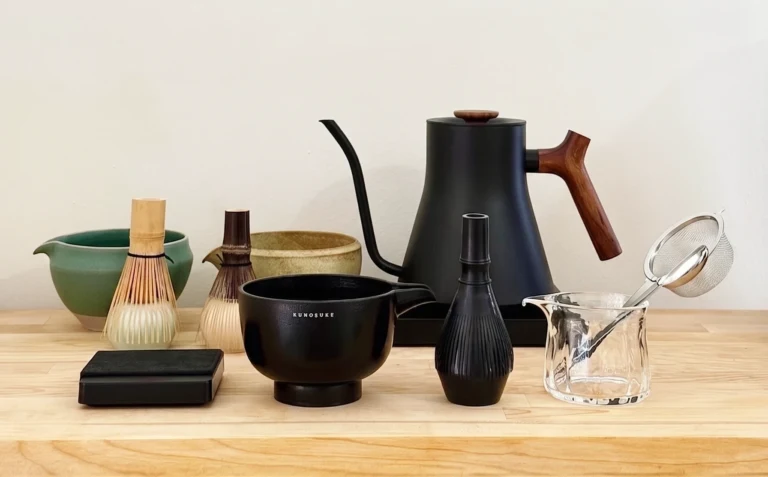
What Tools Do You Need to Make Matcha?
In recent years, matcha has moved beyond traditional tea settings and into cafés, bakeries, and home kitchens. Interest in matcha is no longer limited to matcha lattes and desserts. More people now want to whisk a bowl themselves, using hot water and a bamboo whisk to experience matcha’s aroma, flavor, texture, and fine surface foam in a more direct way.
For someone new to matcha preparation, however, names such as chasen, chawan, chashaku, and whisk stand can be unfamiliar. What does each tool do? Which matcha tools are essential, and which ones simply improve consistency or add to the traditional experience?
The good news is that you do not need to buy an expensive, complete tea set to prepare a simple bowl of traditionally whisked matcha. The essentials are matcha powder, hot water, a suitable bowl, and a whisking tool. Other utensils help reduce clumps, control the powder-to-water ratio, and make preparation and maintenance easier. This guide explains the most common matcha tools from a practical point of view.
A Beginner’s Guide to Matcha Tools
Matcha Sifter
Is it essential? Recommended
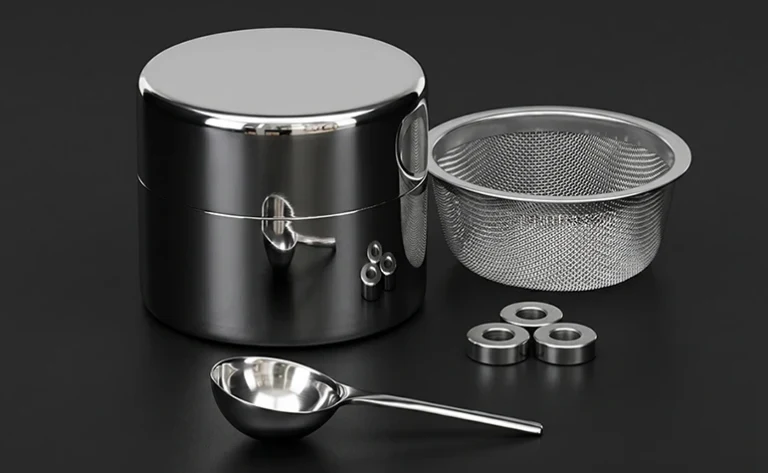
Matcha is an extremely fine powder. During storage and handling, moisture, static electricity, and pressure can cause it to form small clumps. When these clumps meet water, the outside becomes wet first while dry powder remains trapped inside. Even with continued whisking, small particles may remain in the bowl.
Sifting matcha before preparation breaks up these clumps and makes the powder lighter and more even. This can shorten whisking time and help create a smoother texture. The Marukyu Koyamaen matcha preparation guide also recommends sifting matcha in advance so that it disperses more easily in water.
Bamboo Matcha Whisk (Chasen)
Is it essential? The core tool for traditional matcha preparation
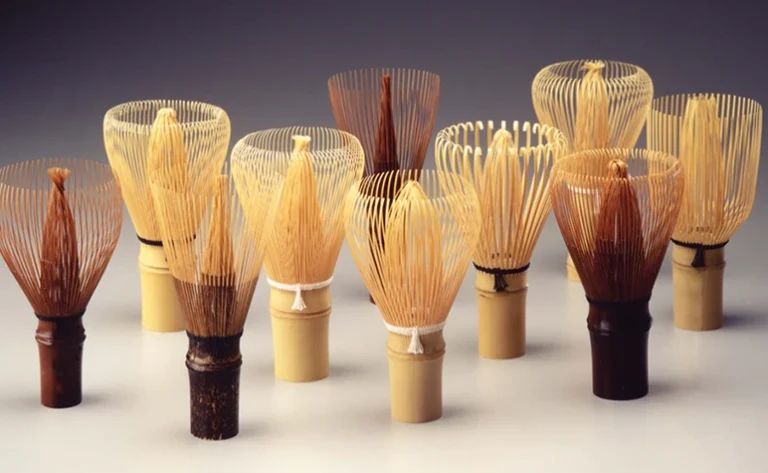
A chasen is usually made from a single piece of bamboo that is cut, split, and woven to form many fine tines. These flexible tines move the water and matcha quickly across a broad area, dispersing the powder and creating a layer of fine foam. For anyone who wants to experience the traditional whisking process, the chasen is the most important tool in the set.
Matcha whisks are often described by the number and structure of their tines, with names such as tsuneho, kazuho, 80-tine, or 100-tine. However, naming conventions can vary among regions and craftspeople, so the stated tine count should not be treated as a perfectly standardized industrial specification. Whisks with fewer tines are generally firmer, while those with more, finer tines can make it easier to create a fine, even layer of foam when whisking matcha. The result still depends on the bamboo, craftsmanship, whisking technique, and condition of the matcha.
For a beginner who wants a smooth, well-aerated bowl of matcha, a commonly available 80- or 100-tine chasen is a practical starting point. Rather than choosing solely by the highest tine count, check whether the tines are even and intact and whether the whisk feels comfortable and responsive in use.

Electric Frother
Is it essential? A convenient alternative to a chasen
If speed and convenience matter more than the traditional process, a handheld electric frother can also be used to prepare matcha. It quickly creates a vortex that helps disperse the powder and introduce air. This makes it useful for beginners, for preparing several drinks in succession, or for people more familiar with modern beverage-making methods.
An electric frother does not create exactly the same whisking feel or foam structure as a bamboo chasen. It is best understood as a convenient modern alternative, rather than a complete substitute for the traditional experience.
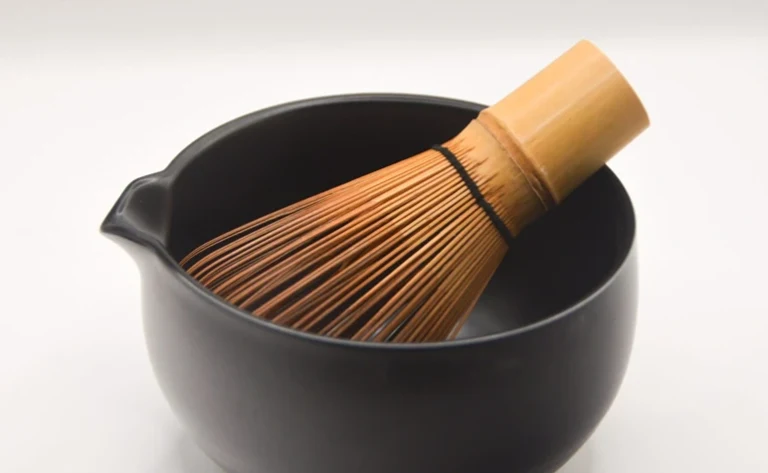
Matcha Bowl (Chawan)
Is it essential? A suitable wide bowl can be used instead
A matcha bowl, or chawan, does more than hold the tea. Its opening, depth, interior curve, and surface texture all affect the whisk’s range of movement and the stability of the whisking process.
Compared with a mug or an ordinary rice bowl, a bowl suited to matcha usually has a wide opening and a relatively open base, giving the chasen room to move rapidly back and forth. It should also be deep enough to reduce splashing. A smooth interior is preferable because rough projections, sharp angles, or a suddenly narrowing base can catch and damage the bamboo tines.
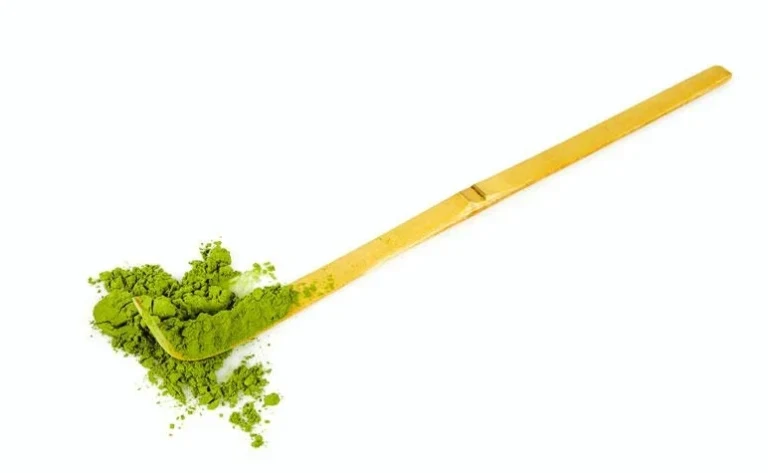
Bamboo Matcha Scoop (Chashaku)
Is it essential? A measuring spoon or digital scale can be used instead
A chashaku is a light bamboo scoop with a curved end, traditionally used to transfer matcha from its container into the bowl. Its simple, distinctive shape makes it one of the most recognizable matcha utensils and brings a more deliberate rhythm to the act of measuring the powder.
A chashaku is not a precision measuring tool, so a digital scale is more reliable when an exact and repeatable powder-to-water ratio is important. After use, gently wipe the scoop with a dry, soft cloth or tissue. Avoid soaking a bamboo chashaku, as prolonged contact with water may cause it to warp, crack, or develop water marks.
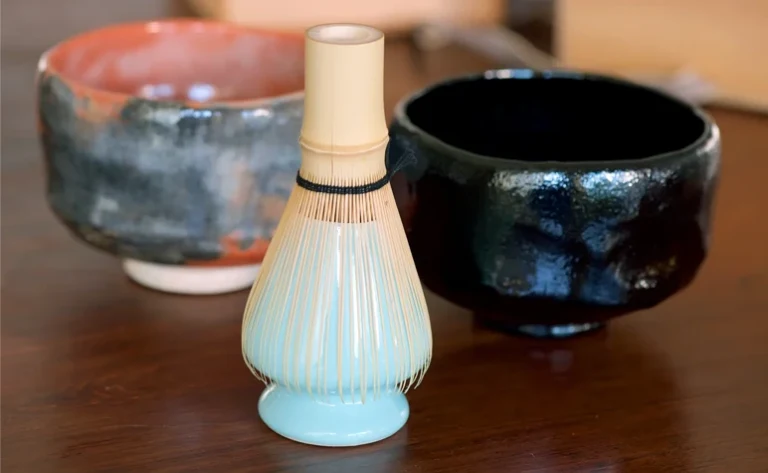
Matcha Whisk Stand (Kusenaoshi)
Is it essential? No, but recommended for regular chasen users
A matcha whisk stand is a small holder shaped to support the curved form of a chasen. It is commonly made from ceramic or earthenware. Placing a rinsed whisk over the stand allows the bamboo tines to dry in their naturally expanded shape, reducing the compression and deformation that can occur when the whisk is laid flat or stored upside down.
A whisk stand is not required to make matcha. However, if you use a bamboo chasen regularly, it is a practical maintenance tool.
Which Other Tools Improve Consistency?
In addition to traditional utensils, a few modern tools can make repeated preparation more consistent:
- Digital scale accurate to 0.1 gram: More reliable than a chashaku for recording and reproducing the powder-to-water ratio, especially when comparing the strength of different matcha powders.
- Thermometer or temperature-controlled kettle: Water temperature affects aroma, bitterness, astringency, and overall balance. Temperature control helps reduce variation from one bowl to the next.
- Measuring cup or graduated container: Makes it easier to control water volume, particularly for beginners who are not yet familiar with judging the water level in a bowl.
- Dry tea towel: Useful for drying the bowl and work surface. Keeping utensils dry before sifting and measuring helps reduce powder sticking to them.
These tools cannot replace the quality of the matcha or proper whisking technique, but they can help beginners identify and repeat the preparation parameters they prefer.
You Do Not Need Every Matcha Tool at Once
For your first attempt at home, start with a fine sifter, a wide bowl, and either a bamboo chasen or an electric frother. A regular measuring spoon or digital scale can be used to control the amount of matcha. If you later want a more traditional preparation experience, you can gradually add a chashaku, a dedicated chawan, and a whisk stand.
The value of matcha tools lies not in how many you own, but in how well they help the powder disperse, make whisking more stable, and keep each utensil in good condition after use. The final color, aroma, flavor, and foam of a bowl of matcha also depend on the matcha itself, the powder-to-water ratio, water temperature and quality, and whisking technique.
In a future article, we will explain the basic steps for preparing matcha, including how much powder and water to use, water temperature, pouring, and whisking technique, so you can put these tools into practice.
For beverage brands, foodservice chains, bakeries, and food product development teams, matcha color, flavor, particle size, and application performance should be evaluated in the intended formulation. Explore Switea’s bulk matcha powder options, or contact Switea for samples, specifications, and a B2B quotation.